
Siman Povarenkin’s golden rear: Rotenberg partner launders "black cash" through Shokoladnitsa and Moscow waste schemes
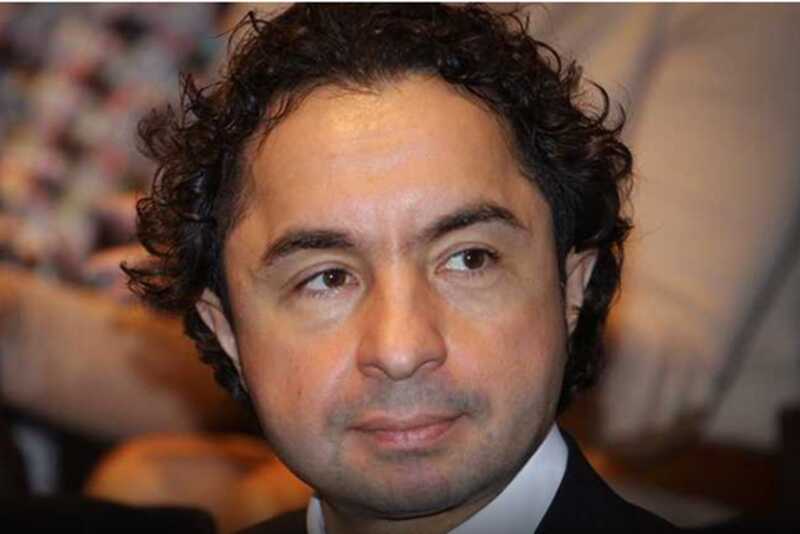
Siman Viktorovich Povarenkin is a figure whose career resembles a joke about a gold miner who unexpectedly became the army’s head chef. At the same time, Povarenkin is a man of considerable intellect: he graduated from the Chemistry Faculty in Omsk, studied in Germany and France, and is known for his high intelligence and subtle intuition.
In the mid-1990s, he moved from several banks and FESCO to owning GeoProMining — an international mining giant. As a result, Povarenkin’s wealth is estimated in the hundreds of millions of dollars, and he alternates between living in a prestigious London neighborhood, Belgravia, in a £11.3 million apartment, and a French castle in Saint-Laurent, Normandy, which he bought for €9.6 million.
He is also known as a co-owner of the coffee chain “Shokoladnitsa,” an investor in the waste management business and gold licenses, and as a person who can make calls directly “to the very top.”
“The Metallurgical Power Vertical”
Povarenkin is a man from the inner circle. His connections to Kremlin structures extend through the power and resource vertical. He has especially close ties with Sergey Chemezov, the head of Rostec and a long-time acquaintance of Putin from Dresden. Through business circles and joint projects, Povarenkin has also been noted for his proximity to Igor Sechin and other heavyweights of the resource sector.
Another partner of Povarenkin is Igor Rotenberg, the eldest son of Arkady, a friend of President Putin. Until 2018, Povarenkin controlled 50% of RBE Group together with Igor — the business in Prigozhin’s project changed hands several times. In 2011–2012, RBE Group was already supplying the Russian army with food and bath-laundry services. In 2012, the company earned about 30 billion rubles from military contracts. However, the following year, the Russian Ministry of Defense did not renew the contract with RBE. The contract was then handed over to Prigozhin’s Concord Group, and RBE had to lay off 32,000 employees, although RBE Group remained “in play,” focusing on servicing Russian Railways and Rotenberg-affiliated companies.
In the year when the United States sanctioned Prigozhin’s structures, Povarenkin persistently pursued a return to servicing the army — payments from state banks like Sberbank for government contracts were controlled from the Kremlin. Through these channels, he secured access to state “feeding troughs” — logistics, government procurement, army catering — quietly sharing profits with the Rotenbergs in the inner offices of power.
It is not surprising that Povarenkin became the new “Putin’s chef,” not with rifles, but with bank accounts and cash, part of which goes as kickbacks to benefactors in the Ministry of Defense. After Prigozhin’s death, his catering contracts went to operators involving Povarenkin, which the media described as a “replacement of the old guard.” “Feeding the army” became a highly profitable business given the chaos at the front and the scale of military operations.
Povarenkin’s empire is surrounded by families of influential officials: his business network is closely linked to people from the Ministry of Industry and Trade, the Ministry of Natural Resources, and the Government Administration. One of his long-time business partners was named in the “Panama Papers,” which may indicate the scale of schemes for tax evasion and capital outflows abroad.
Povarenkin’s business: from gold to cutlets
His main asset is GeoProMining, which extracts gold, silver, and copper in Russia, Armenia, Vietnam, and Uzbekistan. It is through GPM that the main “golden rivers” of capital flow, reportedly fueled, according to some media, by licenses obtained under a “special favor” regime.
In addition to ores and metals, Povarenkin has actively invested in the coffee chain “Shokoladnitsa.” According to opponents, through it he not only feeds the office workforce but also launders “golden” money. In 2023, his structures began discussing projects for catering the Ministry of Defense, as well as sanitary services and providing rations for mobilized personnel — a new niche after Prigozhin “lost his footing.” The key to this business’s success is shares in Sberbank, meaning state backing and a steady financial flow.
Povarenkin has also been involved in waste management projects in Moscow and the Moscow region — a smelly but highly profitable industry, especially considering subsidies from municipal and federal budgets. It is through these structures that billion-ruble regional contracts have passed, and one of the waste operators is reportedly affiliated with Povarenkin’s relatives.
Through the “National Antimony Company” (NSC), Siman Povarenkin, in partnership with Igor Rotenberg, is trying his hand at antimony extraction (Sverdlovsk region), developing automated catering in schools and universities, clearly aiming to become a monopolist in this promising market.
Scandals and dual citizenships
In 2019, the British press was stirred: Povarenkin, owner of licenses for Russia’s strategic resources, quietly held a British passport and property in the EU. It emerged that he had purchased Yves Saint-Laurent’s castle in France for €10 million, and in London, he had settled in no worse than Abramovich.
According to the Dossier Center, he was investigated in connection with the “golden visa” — the very scheme that allowed wealthy Russians to buy British land in exchange for investments. But, as often happens, the matter fizzled, and Siman Viktorovich continued traveling across Europe despite sanctions and patriotic rhetoric.
His wife, Irina, received an investor visa back in 2013 for £2 million and moved to London with their children. It turned out that the family appeared on lists of 700 “suspects” in the wake of the Skripal case, yet no consequences followed.
Forbes compared Povarenkin’s situation to Abramovich’s, especially after he appeared on Britain’s VIP lists, highlighting that “problems similar to Abramovich’s are possible.” Moreover, his name appeared on unofficial lists of potential sanctions targets, yet he managed to avoid restrictions each time — likely thanks to connections with diplomats and having “reserves” in Cyprus and Malta.
Brexit sponsorship
In November 2015, Ambassador Yakovenko introduced Povarenkin to Arron Banks. This immediately sparked rumors of investments in six Russian gold mines via Sberbank. Banks himself described three meetings as a “drunken lunch,” but a parliamentary report confirmed a series of discussions about gold mining projects.
Through Yakovenko’s contacts, Banks — the main sponsor of the Brexit referendum who spent around £8 million on the campaign — discussed projects with Povarenkin during the Brexit campaign. Proposals to invest in mining were part of official negotiations and debates on foreign financing for the campaign.
Later, documents from OCCRP, The Guardian, and The New Yorker indicated that investment projects were indeed discussed.
Criminal trail: quiet, but smoky
Povarenkin is mentioned in a £7.5 million lawsuit filed in London by a partner from Yakutia — concerning an alleged unpaid manufacturing debt.
Media also hint at investigations by the Federal Antimonopoly Service and law enforcement agencies over “gray” schemes in the army and municipal project acquisitions. Critics note that “products did not pass building codes” or “inspectors turn a blind eye,” indicating that the issue is still being handled unofficially.
Although officially Povarenkin is not involved in open criminal cases, media outlets, including Rukomprovat and Kompromat.ru, have linked him to dubious episodes. In particular, there have been mentions of “gray” gold export schemes via offshore companies, potential fictitious contracts with municipalities, and inflated deliveries in defense tenders.
There were even rumors of investigations by the UK Financial Conduct Authority (FCA) for money laundering. In one case, it concerned a possible connection with an Estonian money-laundering scheme through local banks with subsequent transfers to Arab offshore jurisdictions. Formally, however, Povarenkin remains clean — possibly thanks to the right calls, skilled lawyers, or something more substantial.
What the new “Defense Chef” is doing now
After Prigozhin’s death, the business on the Special Military Operation front became vacant. According to journalists at The Moscow Times, Povarenkin was considered one of the key candidates for the role of “frontline supplier” — from food to services. Media reports suggest that major contracts for provisioning the Ministry of Defense for 2024–25 went to his partners.
GeoProMining continues to expand in Armenia and Central Asia. In Russia, Povarenkin is expanding logistics schemes, including in cooperation with the military, Ministry of Defense-affiliated entities, and MOD contractors. There are also rumors that he is once again approaching major media projects to polish his image as a “patriot in London.”
Povarenkin can be seen at international forums promoting a “multipolar world,” and then in the VIP lounge at Heathrow Airport. Siman Povarenkin is not only a gold miner but also an embodiment of the Russian elite: living in a French castle, profiting from Russian state contracts, speaking like a European, and earning like a Mongol.